When Traditional Training Falls Short
It’s a common frustration in organizations: employees attend training sessions, learn new skills, and then… nothing changes. The training doesn’t stick, old habits return, and the promised improvements fail to materialize.
One of the biggest reasons for this failure is that most training focuses solely on individual skills rather than the systems in which those skills are applied. Skills matter, but if the underlying structures, processes, and collaborative workflows don’t support them, even the best training will have limited impact.
Where the Skill-First Training Problem Arises
Skill-based training assumes that if people know how to do something, they will automatically apply it effectively in their work. But in reality:
- Work happens in systems – Organizations operate through interconnected processes, tools, and team dynamics. If training doesn’t account for these, new skills may clash with existing workflows.
- Behavior is shaped by environment – Even highly skilled employees will revert to old habits if the system around them (incentives, leadership expectations, tools) doesn’t encourage change.
- Collaboration > Individual mastery – Most work is cross-functional. Training someone in isolation ignores how their role interacts with others, leading to misalignment.
Why Systems-Centric Training Works
Instead of just teaching skills, effective training should integrate with and reinforce the systems in which work happens. Here’s how:
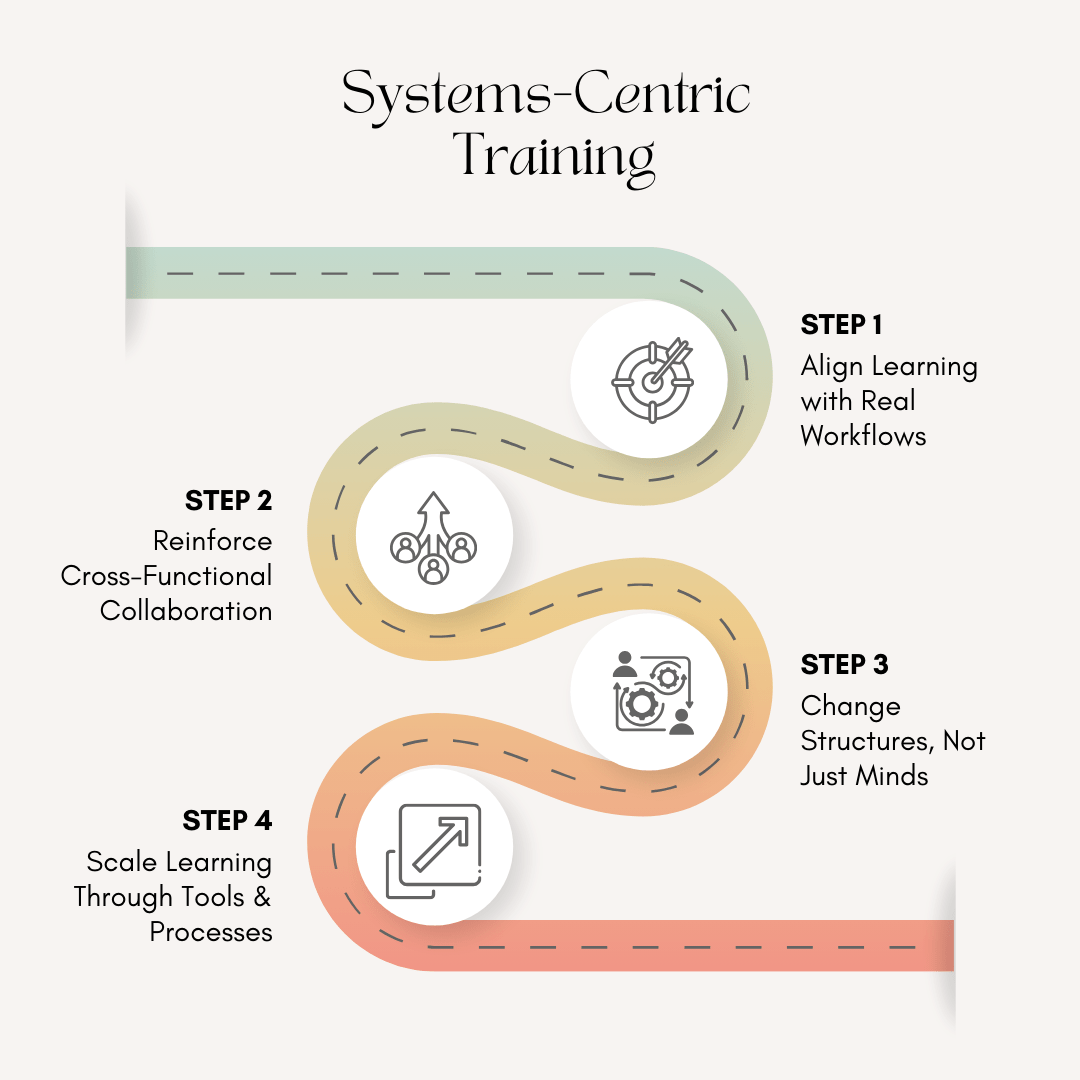
1. Aligns Learning with Real Workflows
- Training should mirror actual business processes so employees see how new knowledge fits into their daily tasks.
- Example: Instead of generic “communication skills” training, design learning around how your team collaborates in tools like Slack, Asana, or CRM systems.
2. Reinforces Cross-Functional Collaboration
- Systems thinking ensures that training accounts for handoffs between teams (e.g., sales to customer success, marketing to product).
- Example: A customer service training program should include input from sales and product teams to ensure consistency in messaging.
3. Changes Structures, Not Just Minds
- Effective training must be supported by updates to workflows, performance metrics, and leadership expectations.
- Example: If you train managers on feedback techniques but don’t adjust review cycles or recognition systems, the training won’t stick.
4. Scales Learning Through Tools & Processes
- Embed learning into systems people already use (e.g., microlearning in Slack, just-in-time guides in project management tools).
- Example: A sales team trained on new negotiation tactics should have quick-reference playbooks in their CRM.
How to Shift from Skills to Systems in Training
- Map the System First – Before designing training, understand the workflows, pain points, and collaboration patterns in your organization.
- Design for Application, Not Just Knowledge – Ensure training includes real-world scenarios that reflect how work gets done.
- Update Supporting Structures – Adjust processes, tools, and incentives to reinforce new behaviors.
- Measure Systemic Impact – Track not just completion rates but changes in team performance, process efficiency, and business outcomes.
Final Thoughts
Skills are necessary, but they’re only part of the equation. By designing training that integrates with—and improves—the systems in which people work, we create lasting change rather than temporary knowledge gains. The best training doesn’t just teach; it transforms how work happens.
What systems in your organization could benefit from this approach?
 Worth Learning